
AMPLIPHY Study
AMPLIPHY STUDY
Two-part design: Identify SEPHIENCE responders, then compare efficacy vs sapropterin
AMPLIPHY was a Phase 3, randomized, crossover, open-label, active-controlled study evaluating SEPHIENCE compared with sapropterin in participants ≥2 years of age with PKU.1
*Participants with <20% reduction in blood Phe levels were classified as non-responsive and discontinued the study.
†Five participants met exclusion criteria and were therefore not randomized into Part 2.
STUDY LIMITATIONS1
Some content in the AMPLIPHY study is not included in the FDA approved USPI. Study limitations include the short treatment duration and the open-label design, which may introduce bias, given the observable physical differences between sepiapterin and sapropterin. In addition, the small number of participants in certain subgroups (e.g., those with classical PKU and those who were BH4 non-responsive) limited the ability to detect statistically significant differences between treatments. Please refer to the accompanying Full Prescribing Information for SEPHIENCE. The data are provided for informational purposes only and should be interpreted with caution. Individual results may vary.
SEPHIENCE Significantly Reduced Blood Phe vs Sapropterin
Evaluating blood Phe vs sapropterin:
This primary analysis population was not prespecified in the Phase 3 APHENITY study and is not included in the SEPHIENCE Prescribing Information. Always refer to the full Prescribing Information for SEPHIENCE use.1*
Primary Analysis Population1
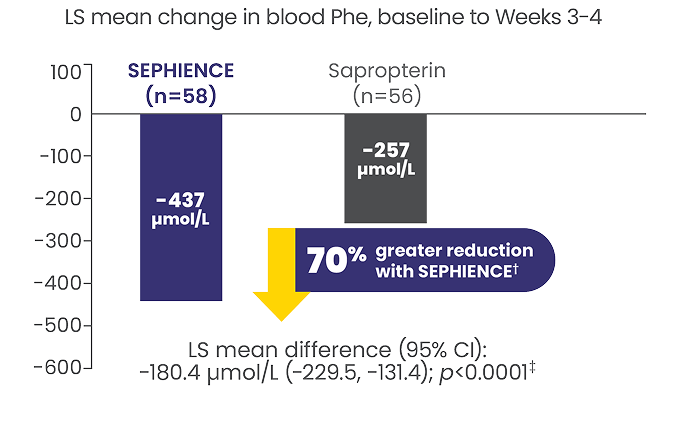
In AMPLIPHY PART 2, SEPHIENCE demonstrated greater reduction in blood Phe from baseline to Weeks 3-4 compared with sapropterin.1
*The primary analysis set comprised participants with mean percentage reductions in blood Phe levels of ≥30% in Part 1, who were randomized and received at least one dose of study drug in Part 2.
†Relative reduction in LS mean with SEPHIENCE vs sapropterin.
‡p value is for LS mean difference based on the calculated mean change in blood Phe from baseline to Weeks 3 and 4 of each
treatment period in Part 2 for each participant.
Consistent & Significant Blood Phe Reduction Across Key Subgroups
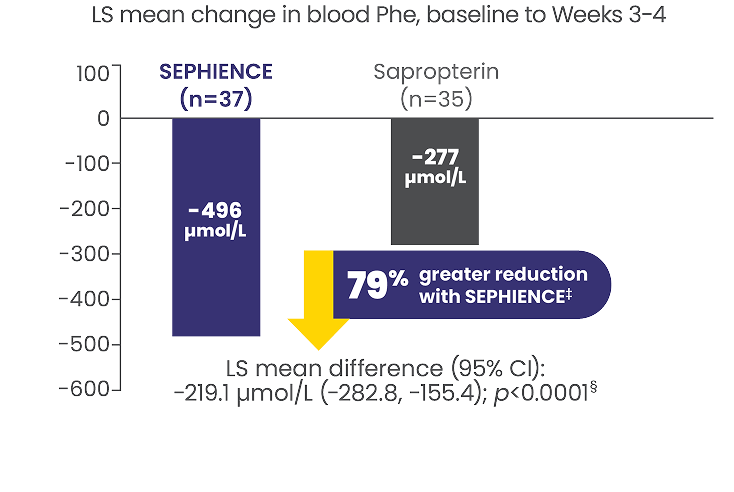
Treatment differences were greater with SEPHIENCE across key subgroups, including participants with prior BH4 exposure1,2*†
BH4-Responsive Participants2
BH4 at Study Entry Population1,2
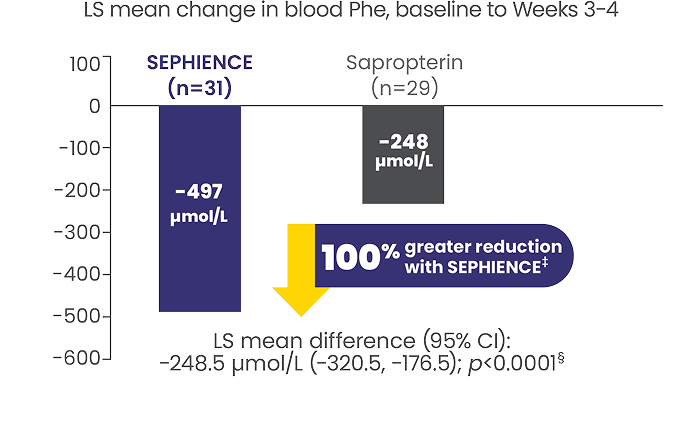
*The primary analysis set comprised participants with mean percentage reductions in blood Phe levels of ≥30% in Part 1, who were
randomized and received at least one dose of study drug in Part 2.
†Data on file. PTC Therapeutics. 2025. Subgroup data are not fully reported in the publication.
‡Relative reduction in LS mean with SEPHIENCE vs sapropterin.
§p value is for LS mean difference based on the calculated mean change in blood Phe from baseline to Weeks 3 and 4 of each
treatment period in Part 2 for each participant.
More SEPHIENCE Patients Reached Target Blood Phe than Sapropterin
A greater proportion achieved target levels during treatment with SEPHIENCE1*
This primary population analysis of target blood Phe levels compared to sapropterin was not prespecified in the Phase 3 APHENITY study nor included in the SEPHIENCE Prescribing Information. Always refer to the full Prescribing Information for SEPHIENCE use.
Secondary Endpoint: Among participants with baseline blood Phe ≥360 µmol/L1
OR (95% CI) = 3.95 † (1.56, 10.04) p=0.0048
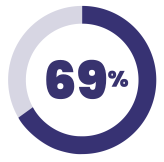
of participants on SEPHIENCE achieved <360 µmol/L (n=36/52)1
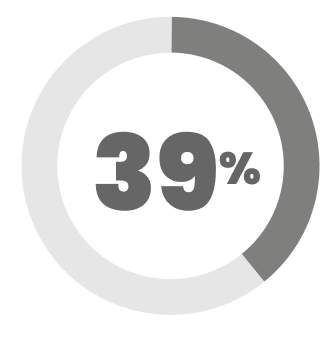
of participants on sapropterin achieved <360 µmol/L (n=20/51)1
*The primary analysis population comprised participants who had achieved a ≥30% reduction in blood Phe levels in Part 1 who were randomized and received at least one dose of study drug in Part 2.
†Odds ratio describes the odds of blood Phe levels reaching the target range for a participant receiving SEPHIENCE compared with the odds of the same event happening for a participant receiving sapropterin.
Additional study details1
Giżewska et al. 2026 Study Summary
Efficacy and safety of sepiapterin versus sapropterin in patients with phenylketonuria (AMPLIPHY)
A phase 3, randomized, crossover, open-label, active-controlled study in participants with PKU aged ≥2 years across 18 hospital clinics in 12 countries. Part 1 was a 14-day open-label sepiapterin responsiveness test. Participants who achieved a ≥20% reduction in blood Phe entered Part 2, a randomized crossover phase in which participants received sepiapterin 60 mg/kg/day and sapropterin 20 mg/kg/day in two 4-week treatment periods, separated by a 14-day washout period.
The primary endpoint was mean change in blood Phe from baseline to Weeks 3–4 of each treatment period. In the primary analysis set, the least squares mean difference in blood Phe reduction favored sepiapterin versus sapropterin (−180.4 μmol/L; p<0.0001). Secondary analyses showed that 89.2% of participants with baseline blood Phe ≥600 μmol/L achieved levels <600 μmol/L, and 69.2% with baseline blood Phe ≥360 μmol/L achieved levels <360 μmol/L with sepiapterin, compared with 51.3% and 39.2% with sapropterin, respectively.
Sepiapterin and sapropterin were well tolerated. The incidence of TEAEs was similar between treatment groups, and no serious TEAEs, TEAEs leading to treatment discontinuation, or deaths were reported.
Study Limitations
AMPLIPHY was an open-label study due to observable differences between sepiapterin and sapropterin. As a result, blinding was not feasible, which may introduce bias. Treatment duration was limited to 4 weeks per treatment period. In addition, the small number of participants in some subgroups (eg, those with classical PKU and those who were BH₄ non-responsive) limited the ability to detect statistically significant differences.
Financial Disclosures of Study Sponsors
Funded by PTC Therapeutics, Inc.
Giżewska M, Inwood A, Tyčová R, et al. Efficacy and safety of sepiapterin versus sapropterin in patients with phenylketonuria: Results from the Phase 3, randomized, crossover, open-label, active-controlled AMPLIPHY trial. Metabolism. 2026;178:156513.
Safety Was Consistent With Sapropterin and With Prior Studies
In AMPLIPHY Part 2, treatment-emergent adverse events (TEAEs) were comparable between treatment groups, with no serious TEAEs, no TEAEs leading to study drug withdrawal, and no deaths reported.1*
PART 2 TEAEs1

Slide table to view more
Any TEAE
Any TEAE ≥Grade 3
Upper respiratory tract infection
Nasopharyngitis
Nausea
SEPHIENCE (%)
N=62
41 (66.1)
2 (3.2)
9 (14.5)
8 (12.9)
5 (8.1)
6 (9.7)
6 (9.7)
5 (8.1)
Sapropterin (%)
N=60
37 (61.7)
1 (1.7)
4 (6.7)
9 (15)
4 (6.7)
1 (1.7)
2 (3.3)
8 (13.3)
*The safety analysis set comprised all participants who received at least one dose of study drug, including in Part 1.
Stay informed
Sign up to receive updates, clinical insights, and resources straight to your inbox.
BH4: Tetrahydrobiopterin; CI: Confidence interval; LS: Least squares; OR: Odds ratio; Phe: Phenylalanine; PKU: Phenylketonuria; TEAEs: Treatment-emergent adverse events.
References: 1. Giżewska M, Inwood A, Tyčová R, et al. Efficacy and safety of sepiapterin versus sapropterin in patients with phenylketonuria: Results from the Phase 3, randomized, crossover, open-label, active-controlled AMPLIPHY trial. Metabolism. 2026;178:156513. 2. Data on file. PTC Therapeutics. 2025.
You are now leaving the SEPHIENCE website and will enter a website operated by an independent third party. The links to third-party websites contained on this website are provided solely for your convenience. PTC Therapeutics does not control the opinions, claims, or comments on any third-party website linked to this website; the policies and practices of those third parties will govern your activities at those websites.